Part 2 of 2

Preface – Two “briefings” (Part 1 and Part 2) prepared by Claude AI under my instructions—drawing on four previous queries in May—are quite deep and dense with assumptions, numbers and dates, so I asked Claude to prepare a synopsis and synthesis of the two (this preface is being added to Part 1 as well). Following is what Claude prepared in summary, intended as a letter or email of transmittal to people of influence::
Two climate briefings, in plain English
These are two short briefings on what it would take to stabilize the climate. They are dense, so here is the gist of each and what they mean together.
1. The Road to Net Zero. This briefing asks what happens if the world keeps decarbonizing at a realistic pace. Power plants and cars clean up first. Airplanes, ships, steel and cement come last, so true global “net zero” (no more CO₂ added each year) arrives around 2065–2080, not 2050. CO₂ in the air keeps climbing to about 480 ppm around 2060, compared with 432 today, and then drifts down only slowly. Warming passes 1.5 °C around 2030 and peaks near 2.1 °C around 2070. After that it levels off but does not fall. The transition costs more up front, but lower fuel bills pay it back by about 2070, and the overall economy comes out ahead from the 2040s on. Net zero stops the damage from getting worse. It does not undo the damage already done.
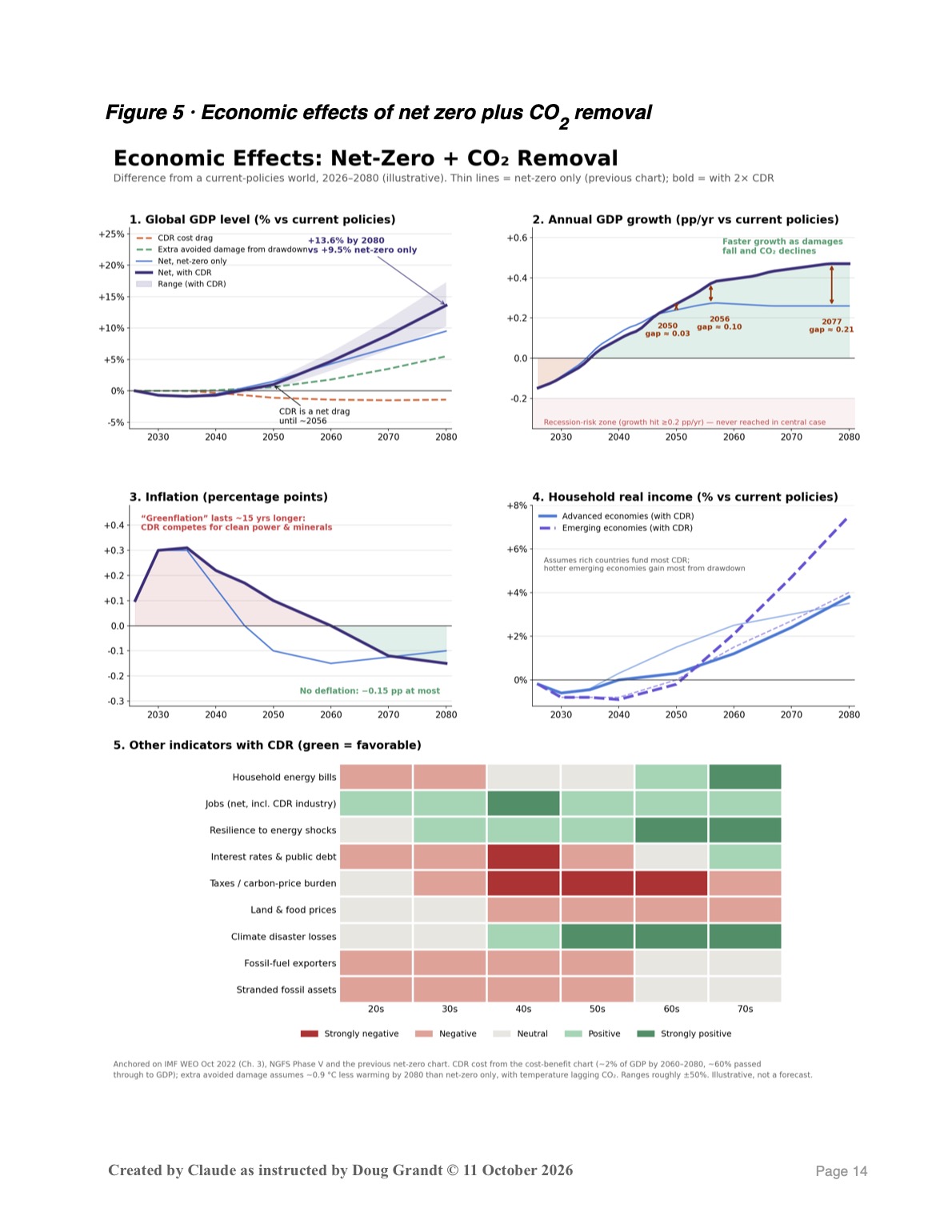
2. Net Zero Plus Carbon Removal. This briefing asks what it would take to go further and actually return the atmosphere to pre-industrial CO₂ levels of about 280–300 ppm. The answer is an industry that pulls CO₂ back out of the air through forests, soils, crushed rock and machines. By 2080 it would have to remove about 85 billion tonnes a year, roughly twice what the whole world emits today. If that were done, warming would peak near 1.9 °C around 2052, drop back below 1.5 °C around 2074, and fall to about 0.8 °C by 2100. The price is about $8 trillion a year, around $215 trillion in total. It only makes economic sense once you count the climate damage it prevents, because removing carbon saves no one any money on fuel. The oceans also push back: as CO₂ is pulled from the air, the seas release some of what they absorbed. Nearly half of every tonne removed is cancelled out this way.
Taken together. The two briefings agree on three hard truths:
- Cutting emissions is necessary but not enough. Even a successful transition leaves us stuck at about 2 °C for centuries.
- The only way back down is to take carbon out. That takes an effort as large as the energy transition itself, built alongside it and not in place of it, and it would have to keep running indefinitely to hold the gains.
- The cost of acting is real, but the cost of not acting is larger. Once avoided climate damage is counted, both paths leave the world economy better off, and the sooner we start, the cheaper it gets.
Think of the first briefing as turning off the tap. The second briefing is about bailing out the bathtub, and the bathtub keeps leaking water back in.
The carbon-removal scenario is best read as an upper bound on what it would take, not a forecast of what will happen. It is several times larger than anything in the IPCC’s pathways, and neither briefing models tipping points such as ice-sheet collapse.
With best regards,
Doug Grandt
Claude added this final editorial which does not require action as the difference noted will probably only be noticed by the most intense reviewer, for which these are not intended:
I noticed one thing worth fixing before you send. Section 3 of the carbon-removal riefing says the net-zero-only path “peaks higher than in the companion briefing: about 482 ppm … rather than 463 ppm.” But 463 ppm is the carbon-removal path’s own peak. The companion briefing’s figure is about 480 ppm, so the two briefings actually agree. The sentence should say that, or be dropped.
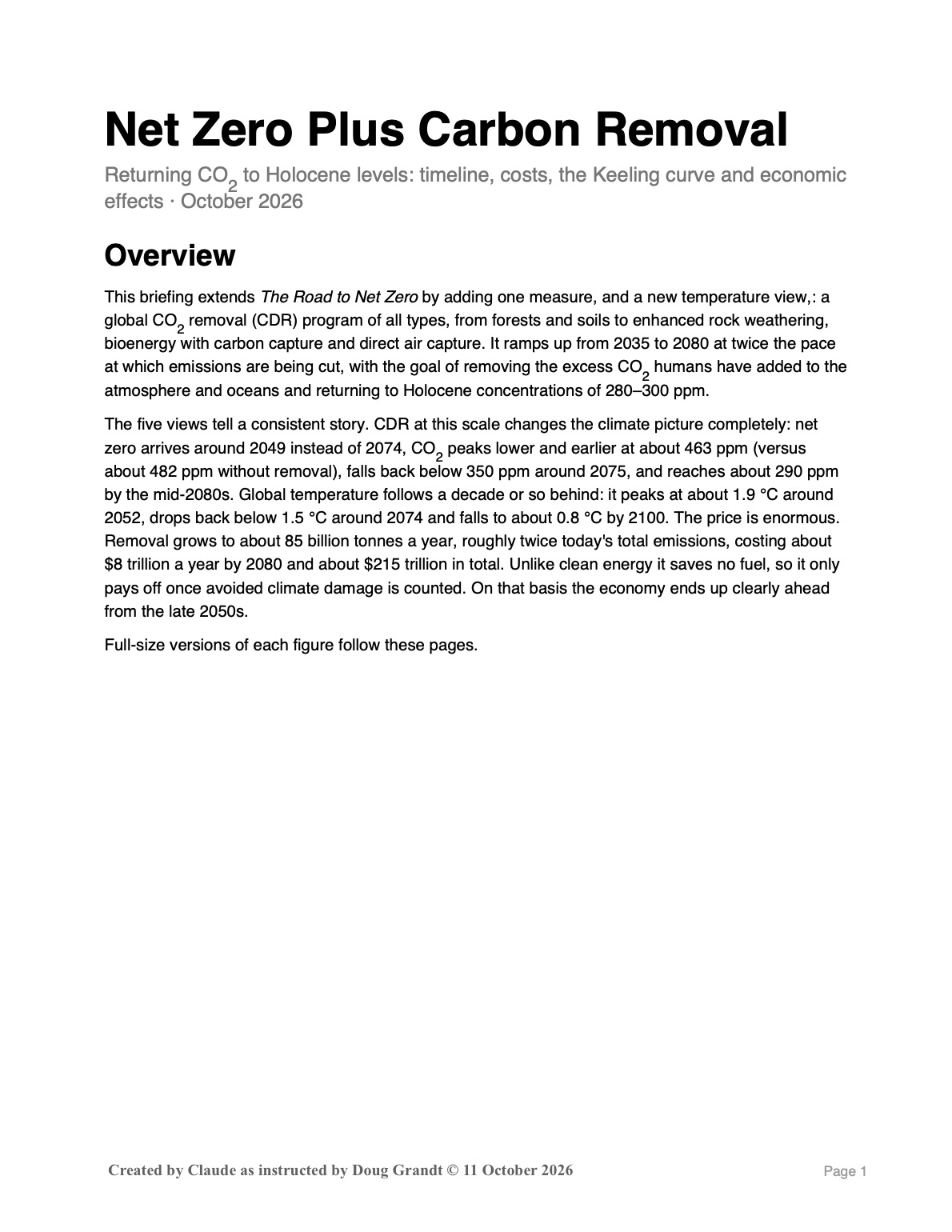
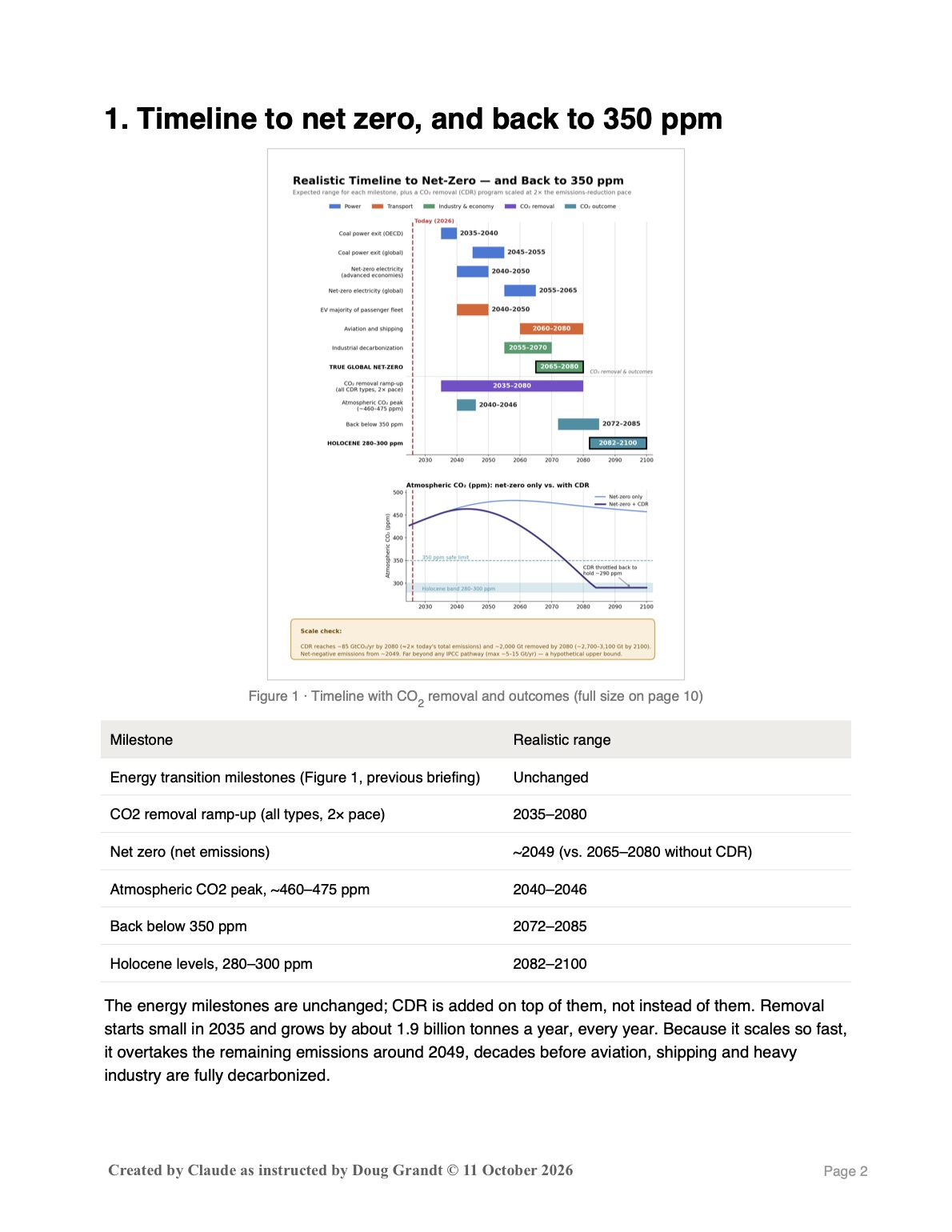
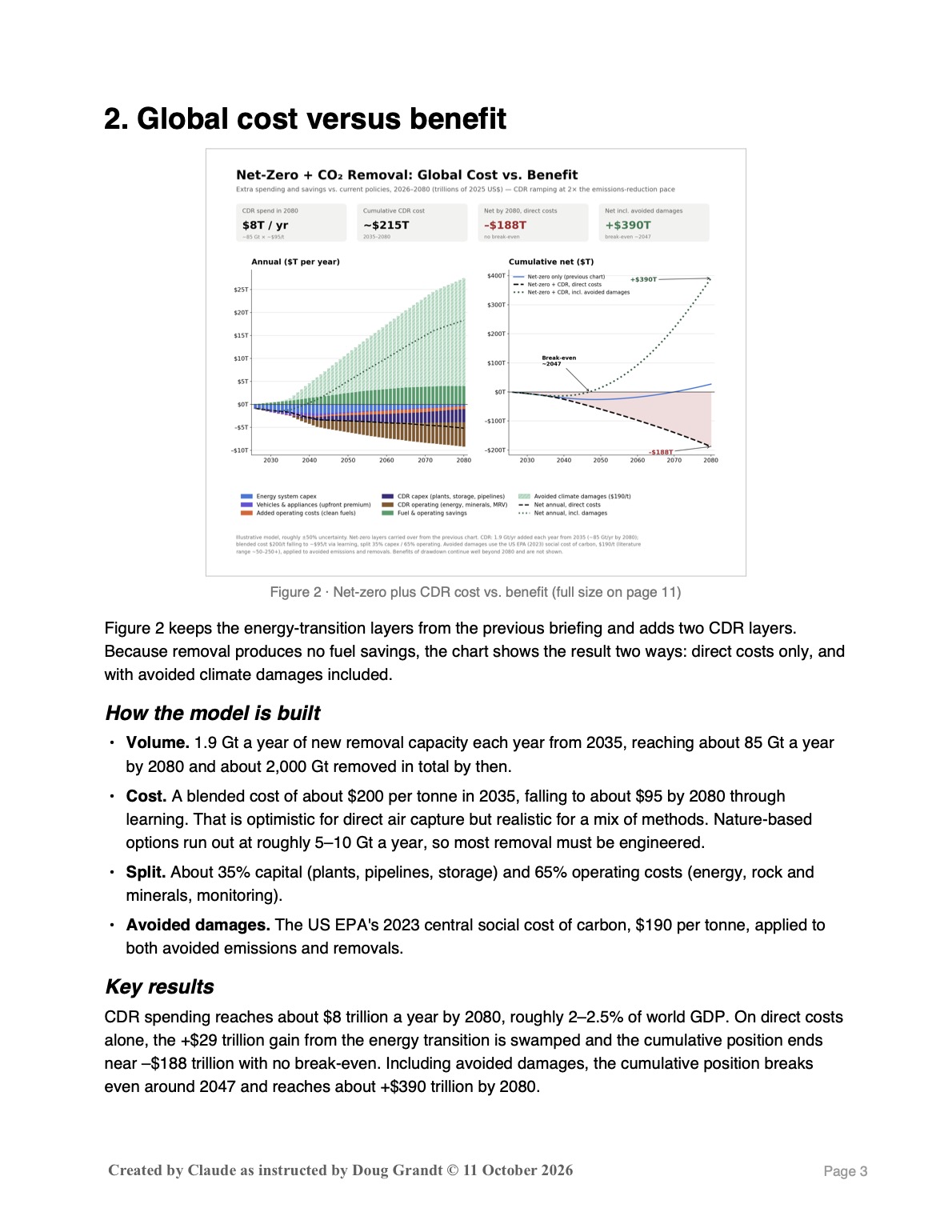
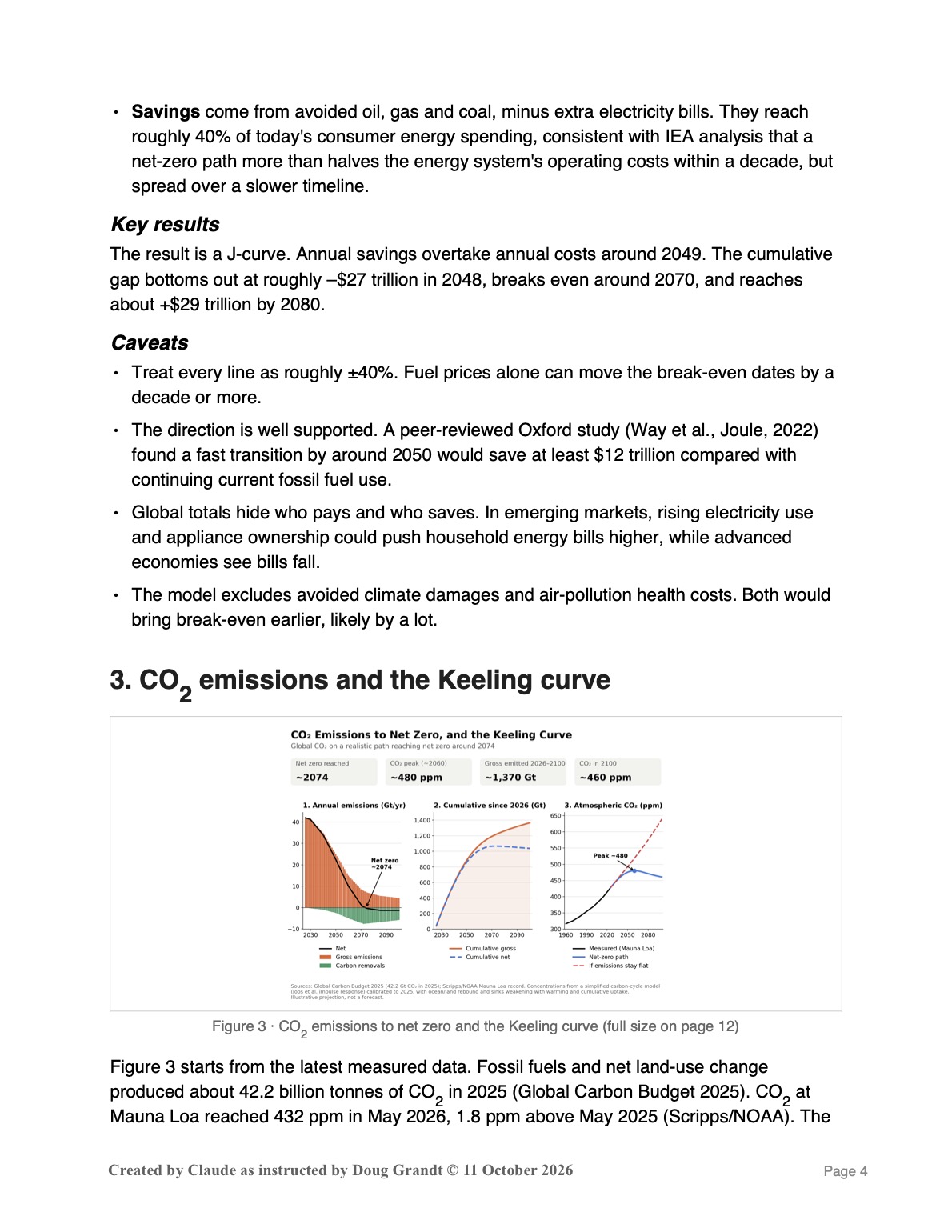
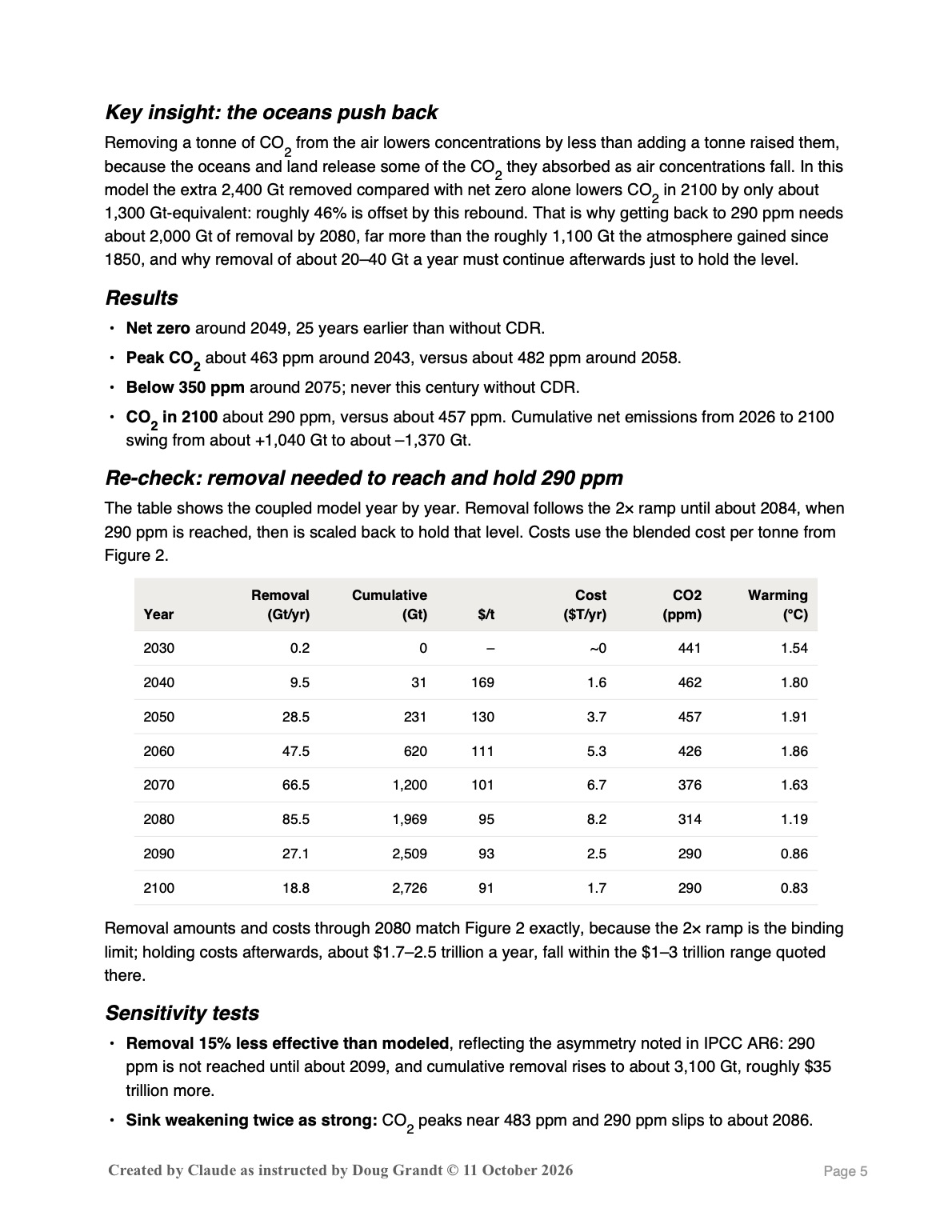
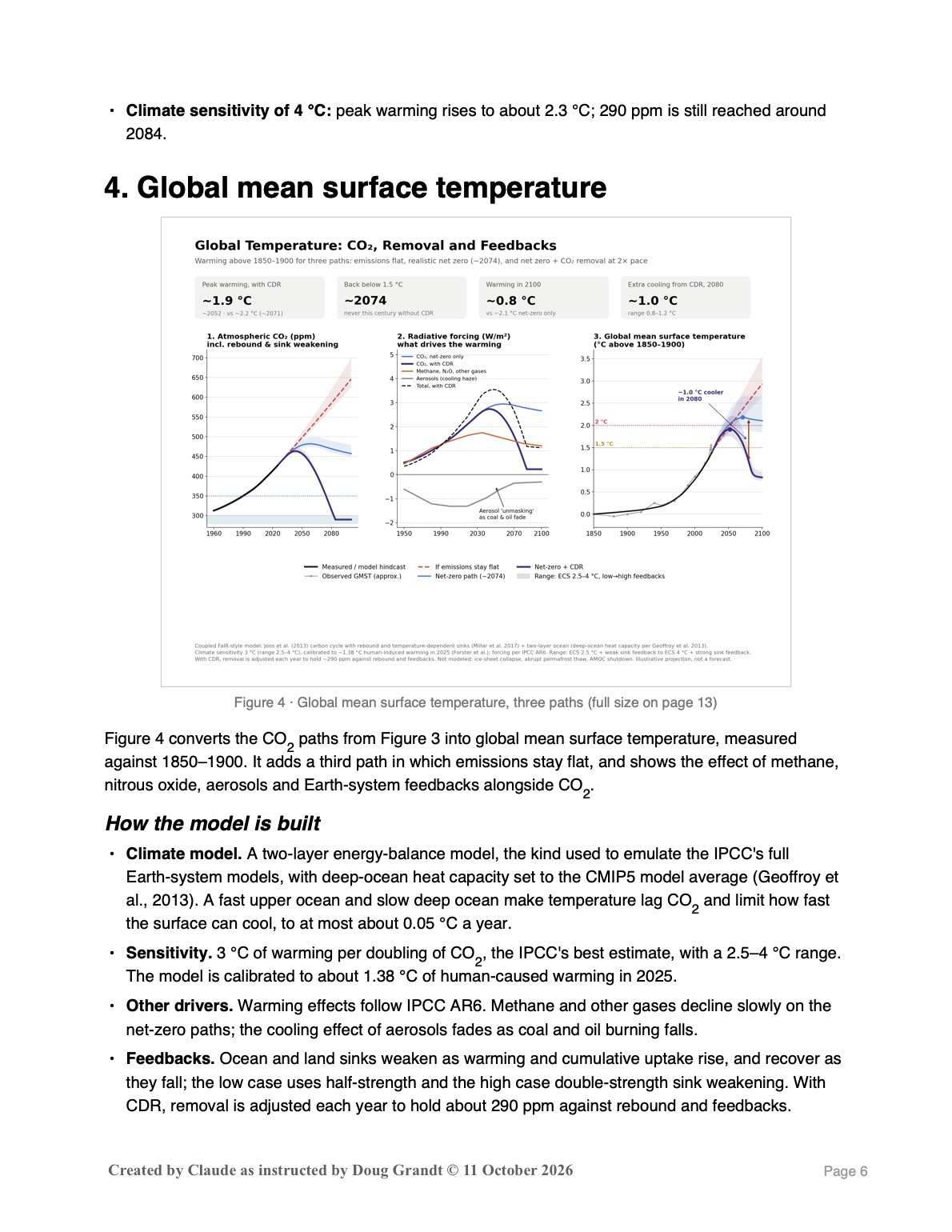
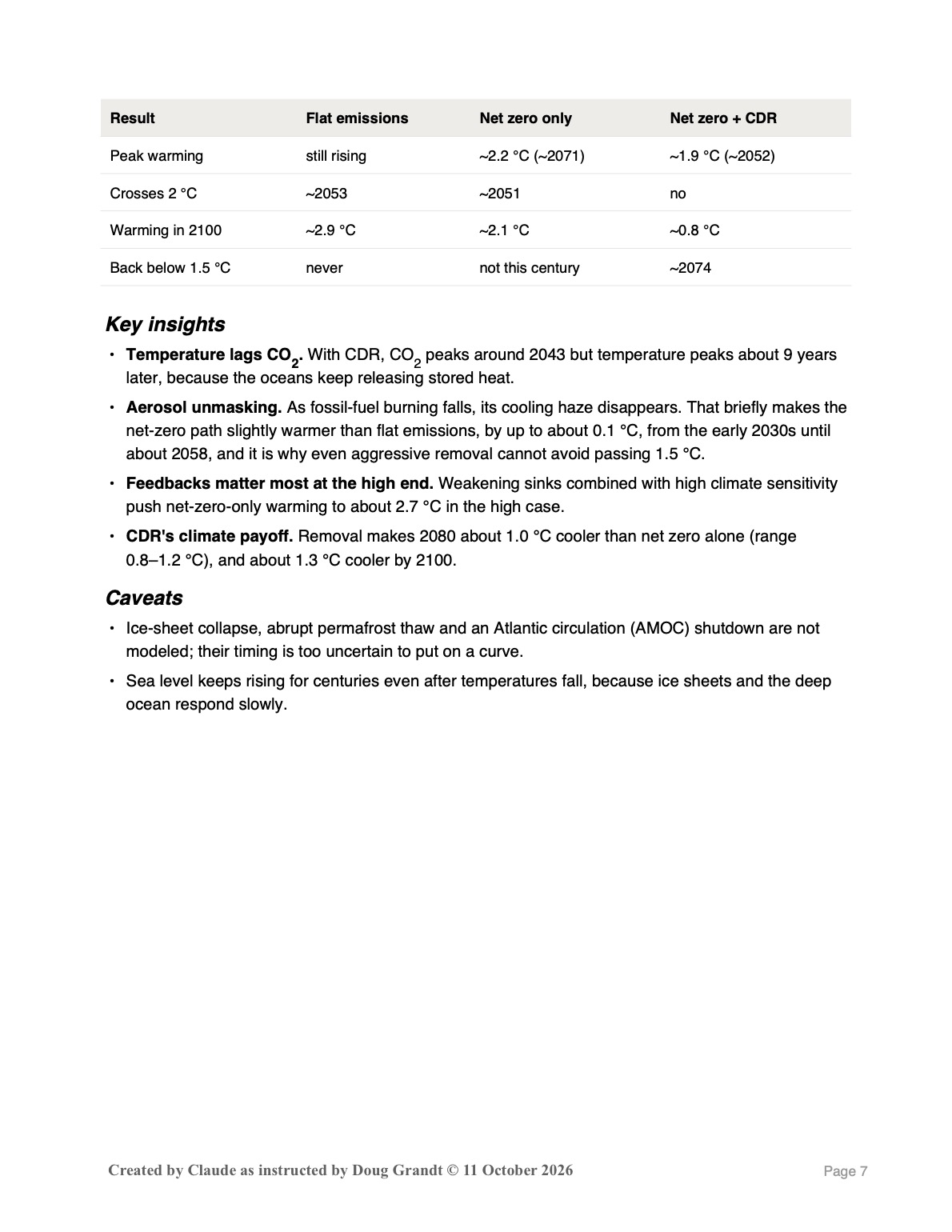
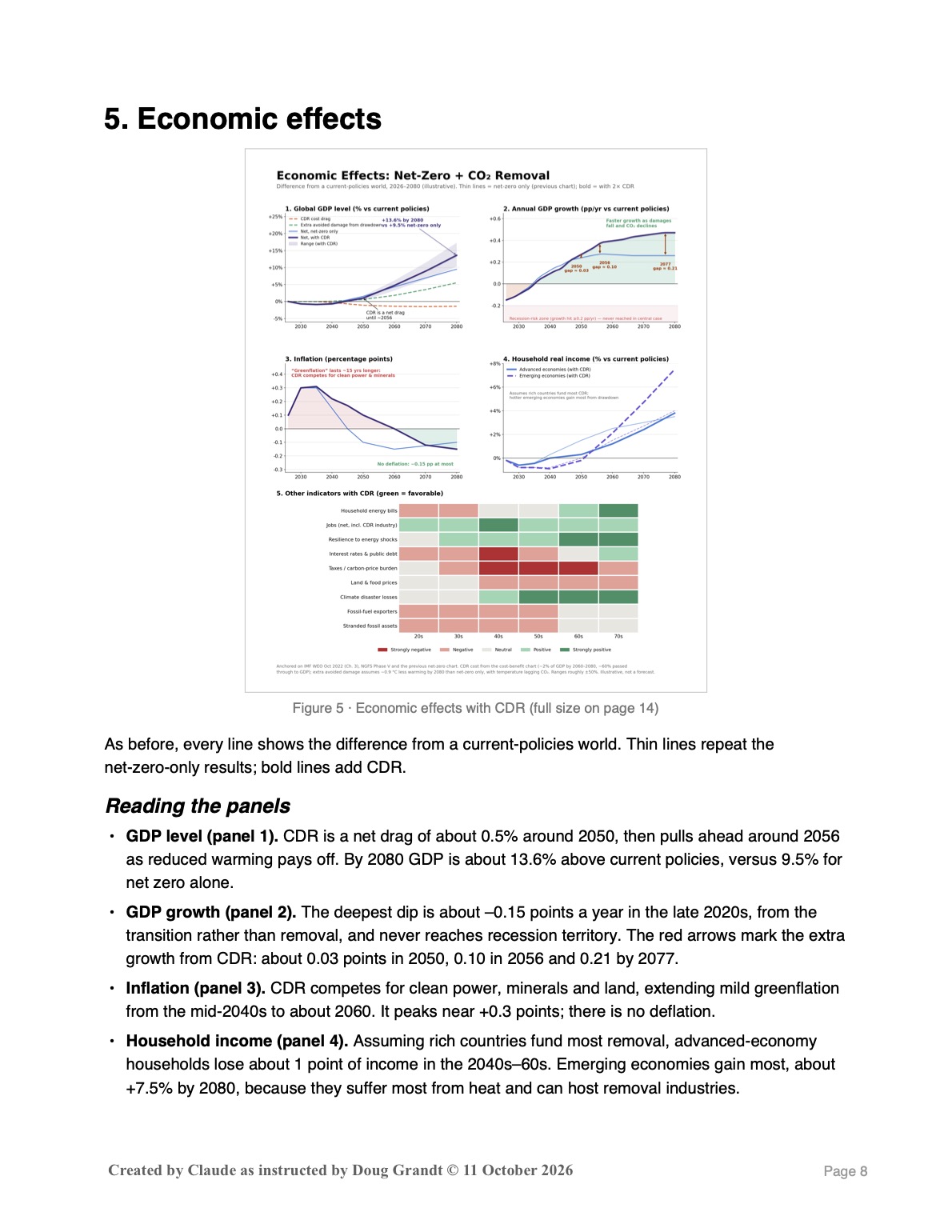
Chart 1
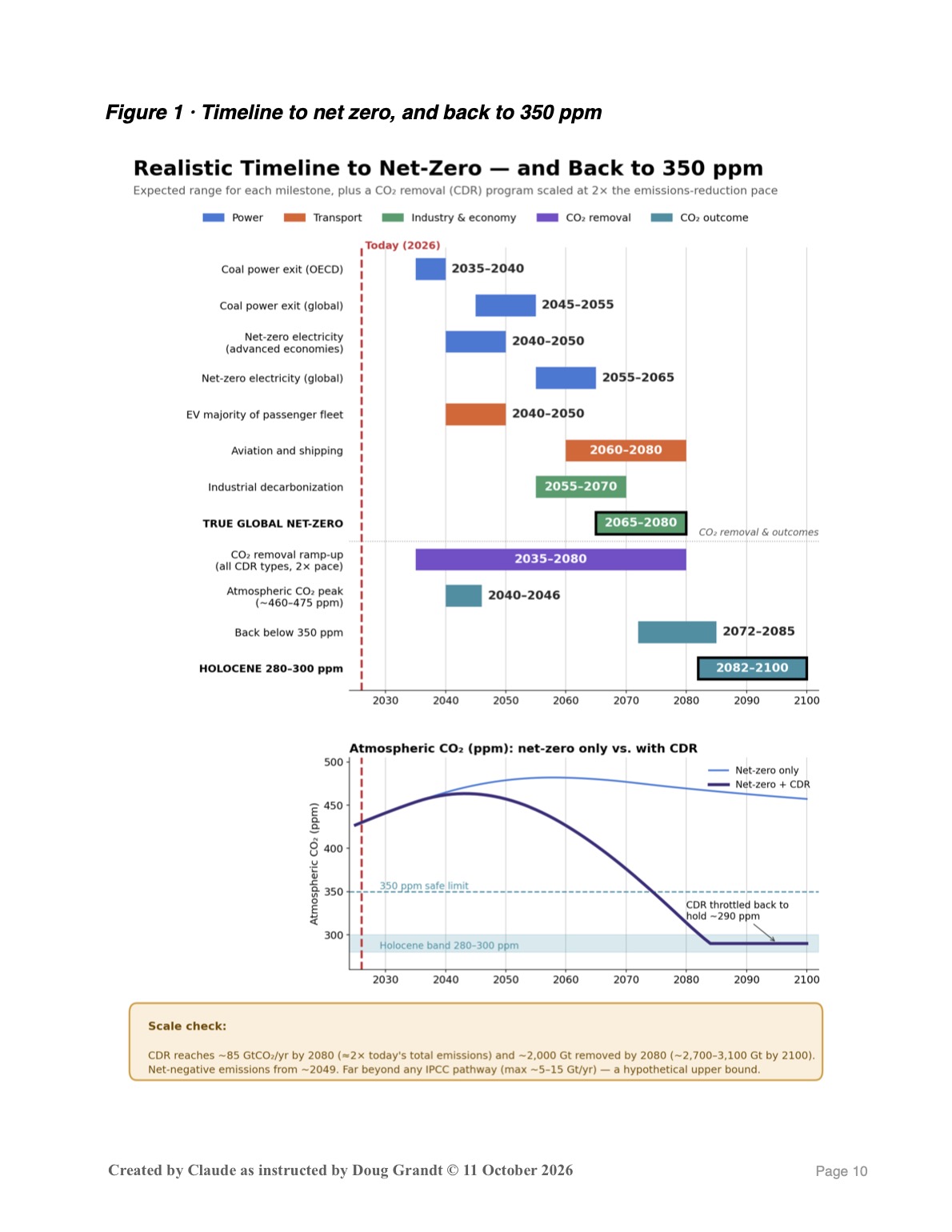
Chart 2
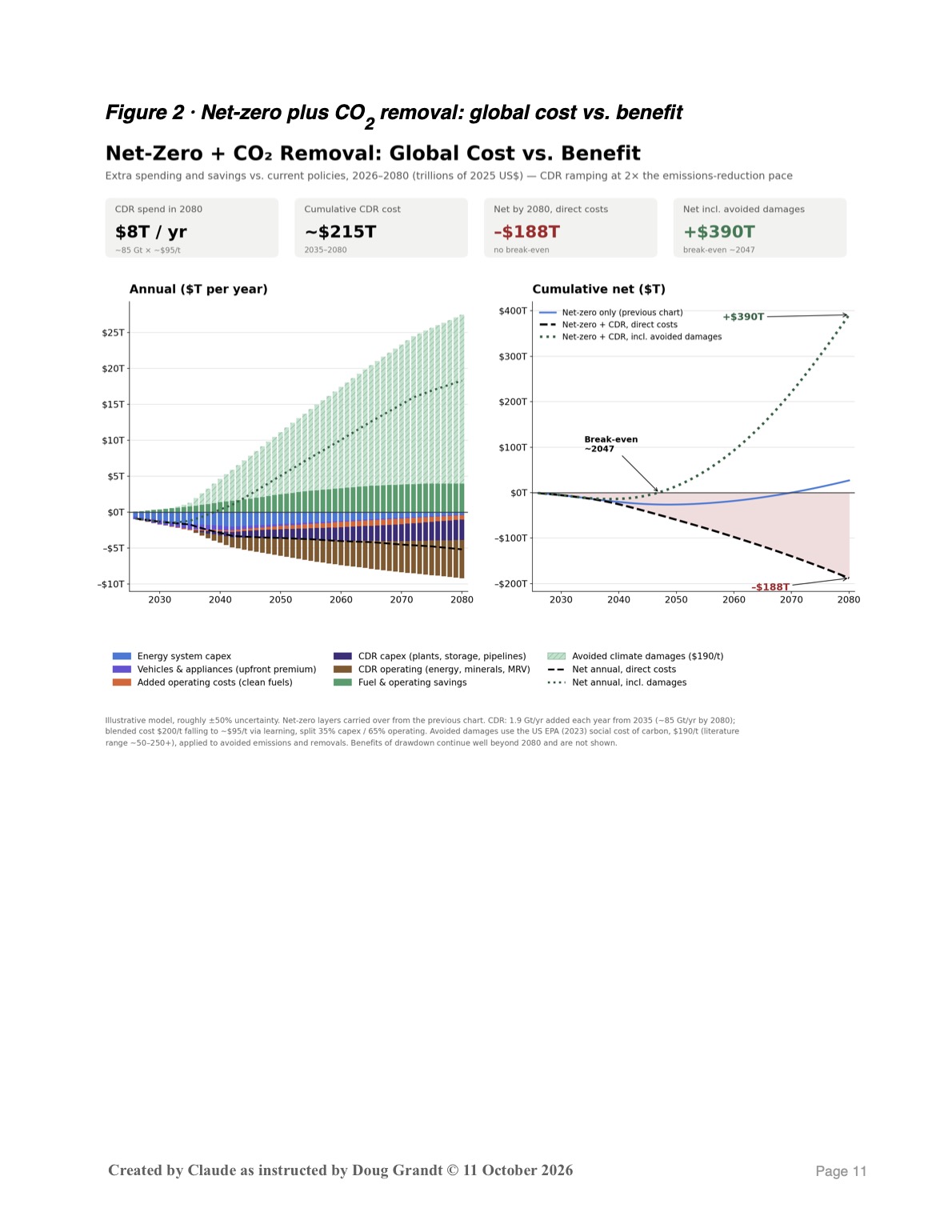
Chart 3
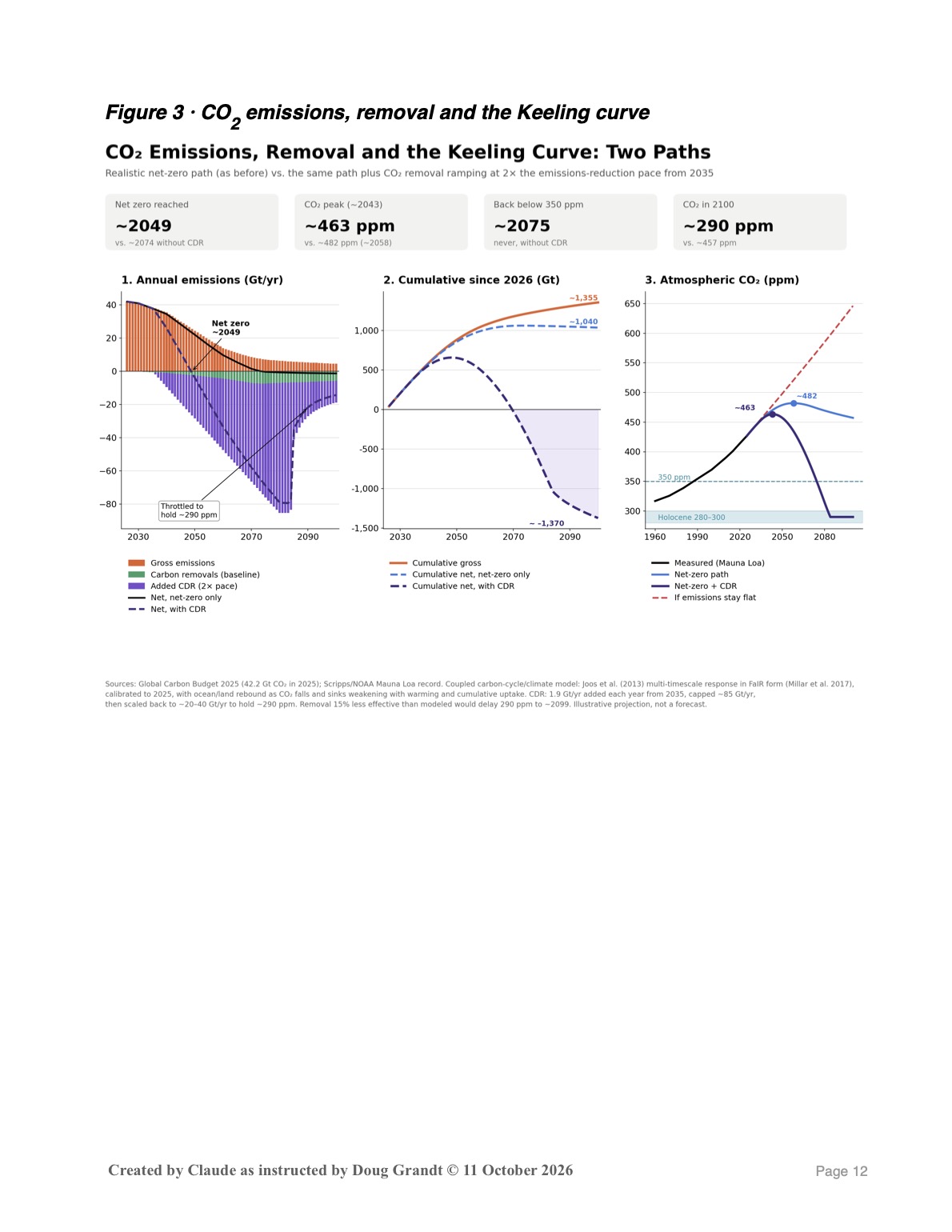
Chart 4
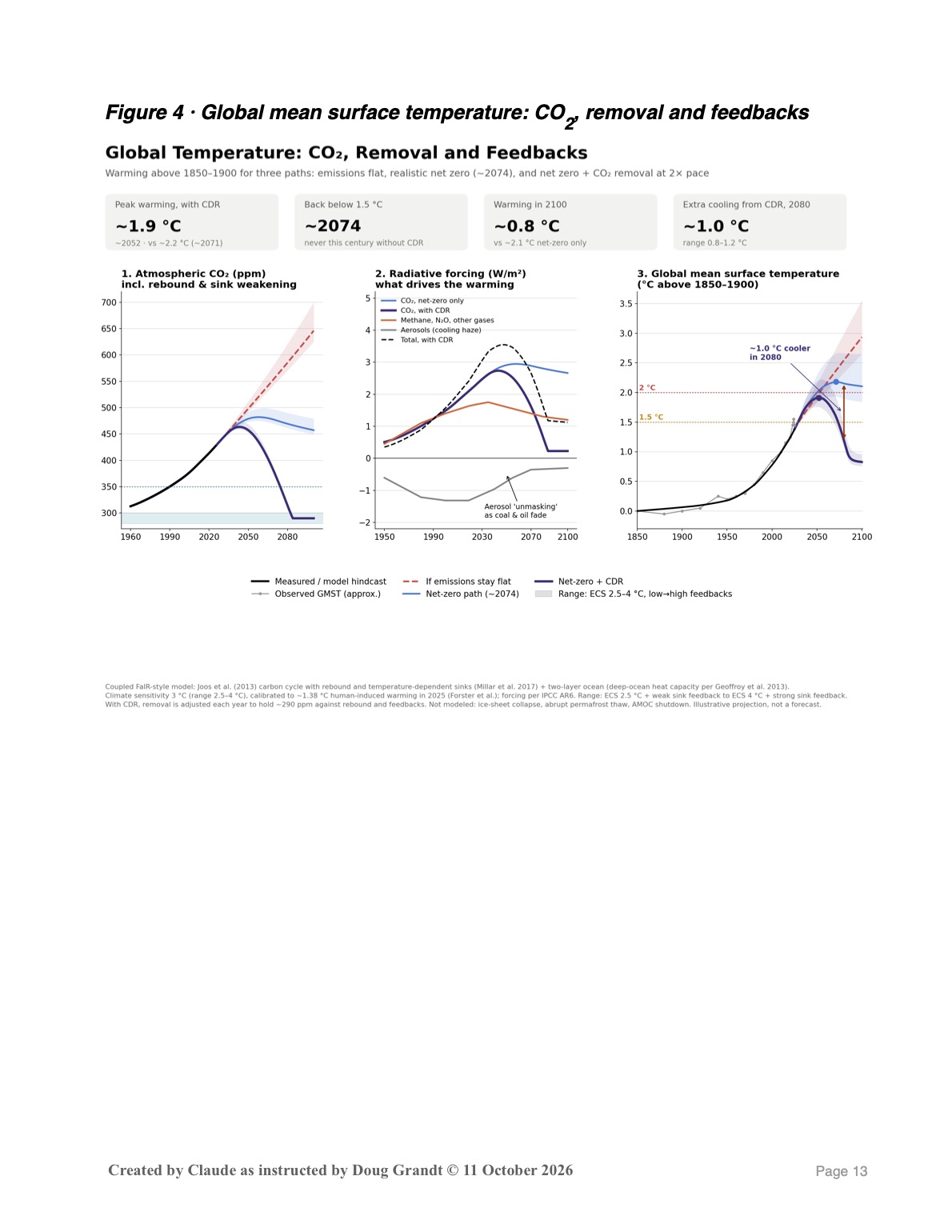
Chart 5